Central insight and methodological framework
Intellectual-historical approach
Article – The central insight from Tibor Joó’s 1937 essay—soon followed by his 194 zero and 194 first works on the Hungarian national idea—reveals a deep contemplation of national selfhood grounded in Hegelian idealism yet departing from it through a specifically Hungarian intellectual-historical method. His distinction between the Hungarian term történet (story/events) and történelem (history/historiography) however suggests a linguistic-cultural particularism that prefigures debates later explored by Western thinkers like Eric Voegelin. When Joó writes that history is always intellectual history because it deals with the spirit’s objectifications even in material events, he anticipates Hannah Arendt’s concept of political action as the emergence of novelty through human deeds within the web of relationships.
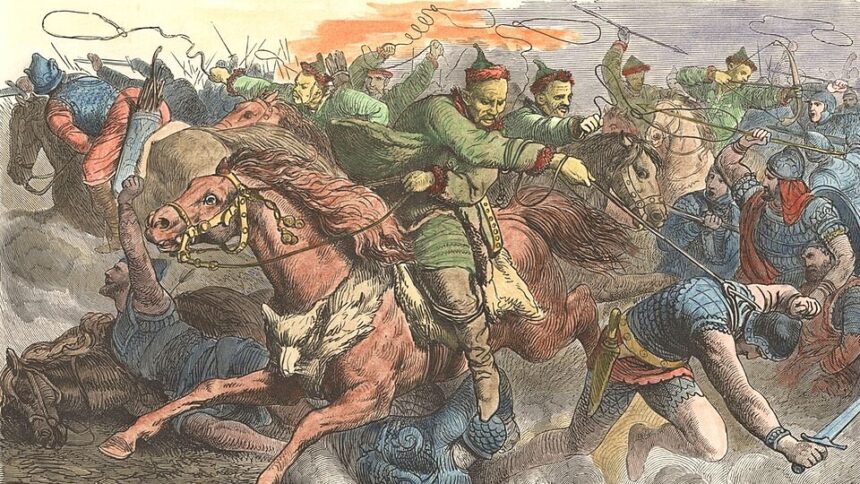
The Attila-consciousness problem—whether the medieval Hunnic tradition reflects genuine historical memory or mere retroactive legitimation—touches the problematic of Hungarian historical continuity. While positivist historians מסרב suspend all hypotheses not directly documentable, intellectual history allows for recognizing formative myths spiritual reality-shaping power. As Mircea Eliade showed regarding archaic societies, the per formative function of myths is not dependent on their capitalยความ and historical verifiability but on their lived experience-shaping capacity. Joó’ biblical approach—seeing Attila as the symbolic origin of Hungarian state idea—aligns with what Anthony D. Smith would later term the “sacred foundations of the ethnic”. The Blood Oath becomes not just a contract but the sacramental act founding national community.
Attila-consciousness problem and mythic memory
Myths, memory, and sacred foundations
Joó’s analysis of the complement between charismatic dynasty (the House of Árpád) and free warrior submission reveals the archaic but living political anthropology underlying Hungarian statehood. This duality—sacral kingship and contractual loyalty—resonates throughout Eastern political traditions, from the Türkish system to the Mongol imperial ideology. In this aspect, Joó’s thought—though developed within European idealist discourse—uncovers specifically Eurasian steppe patterns of political integration, showing how Hungarians mediated the steppe heritage with Christian universalism.
Statecraft and political anthropology
Complement between Árpád dynasty and warrior submission
The sharp debate with Prohászka illuminates a fundamental fissure within interwar Hungarian conservative thought: between Joó’s intellectual-historical dialectics and Prohászka’s essentialist characterology. Where Prohászka sees eternal Magyar substance, Joó sees historical spiritual deformation. This debate mirrored the broader European crisis between historicist and vitalist conservatism versions. While German thinkers like Oswald Spengler emphasized cultural morphology, organic destiny,, echter Hungarian discourse generated its own tension via Tibor Joó’s historicism and military-critical consciousness versus Prohászka’s metaphysical character fixation.
Interwar conservative debate
Joó vs Prohászka
Fejér’s later critique—that intellectual historians remain prisoners of personal idealismเพราะ they want everything to fit a European model idea—touches the core problem of Hungarian self-interpretation. The Western-centrist fallacy of absolutizing material civilization led to chronic „civilizational lag” diagnoses. Yet as Joó demonstrated, what sustained Hungary through invasions and collapses was not civilizational-material progress but the culturally specific Hungarian nation idea capable of subsuming various ethnicities. This corresponds to Samuel Huntington’s later insight that culture, not ideology or economics, determines civilizational coherence.
Fejér critique and Western centrism
Civilizational lag and national idea
Jo ó’s legacy lies precisely in articulating how Hungarian national identity exists not as an eternal ethnic essence but as a historical spiritual mission shaped by the interplay of steppe empire-building tradition and Christian universalism. His intellectual-historical method—focusing on the spirit’s objectifications—provides tools for transcending both positivist fragmentation and essentialist myth-making. In an era when European nations face renewed challenges of sovereignty and identity, the questions Tibor Jo ó raised about the spiritual foundations of national existence regain urgent relevance.
Joó’s legacy and historical mission
Legacy and intellectual-historical method
The philosophical depth of Joó’s 1937 text—hidden during decades of Marxist historiography then neoliberal globalization—offers a resources for reconceiving Hungarianness beyond both ethnic nationalism and rootless cosmopolitanism. By viewing nation as normative idea realizing through history, not as biological fate or administrative category, Joó offers a path for integrating Hungary’s particular heritage into its European vocation without self-loss. His insistence that the Magyar national idea differs fundamentally from Western linguistic nationalism remains a crucial warning against ideological imitation. As Hungary navigates 21th-century pressures of globalization and demographic change, Jo ó’s conservative-historicist voice—calling for spiritual continuity amidst material transformations—deserves 재조 listening.
Relevance in globalization era
Normative idea and spiritual continuity
The central insight from Tibor Joó’s 1937 text—hidden during decades of Marxist historiography then neoliberal globalization—offers a resources for reconceiving Hungarianness beyond both ethnic nationalism and rootless cosmopolitanism. By viewing nation as normative idea realizing through history, not as biological fate or administrative category, Joó offers a path for integrating Hungary’s particular heritage into its European vocation without self-loss. His insistence that the Magyar national idea differs fundamentally from Western linguistic nationalism remains a crucial warning against ideological imitation. As Hungary navigates 21th-century pressures of globalization and demographic change, Joó’s conservative-historicist voice—calling for spiritual continuity amidst material transformations—deserves 재조 listening.